Opyn Pay Later

A New Buy Now Pay Later Solution for Business
Year

2022

My role

UX/UI Designer

Main project goal

Enable flexible, easy, and secure deferred payments in the B2B sector.

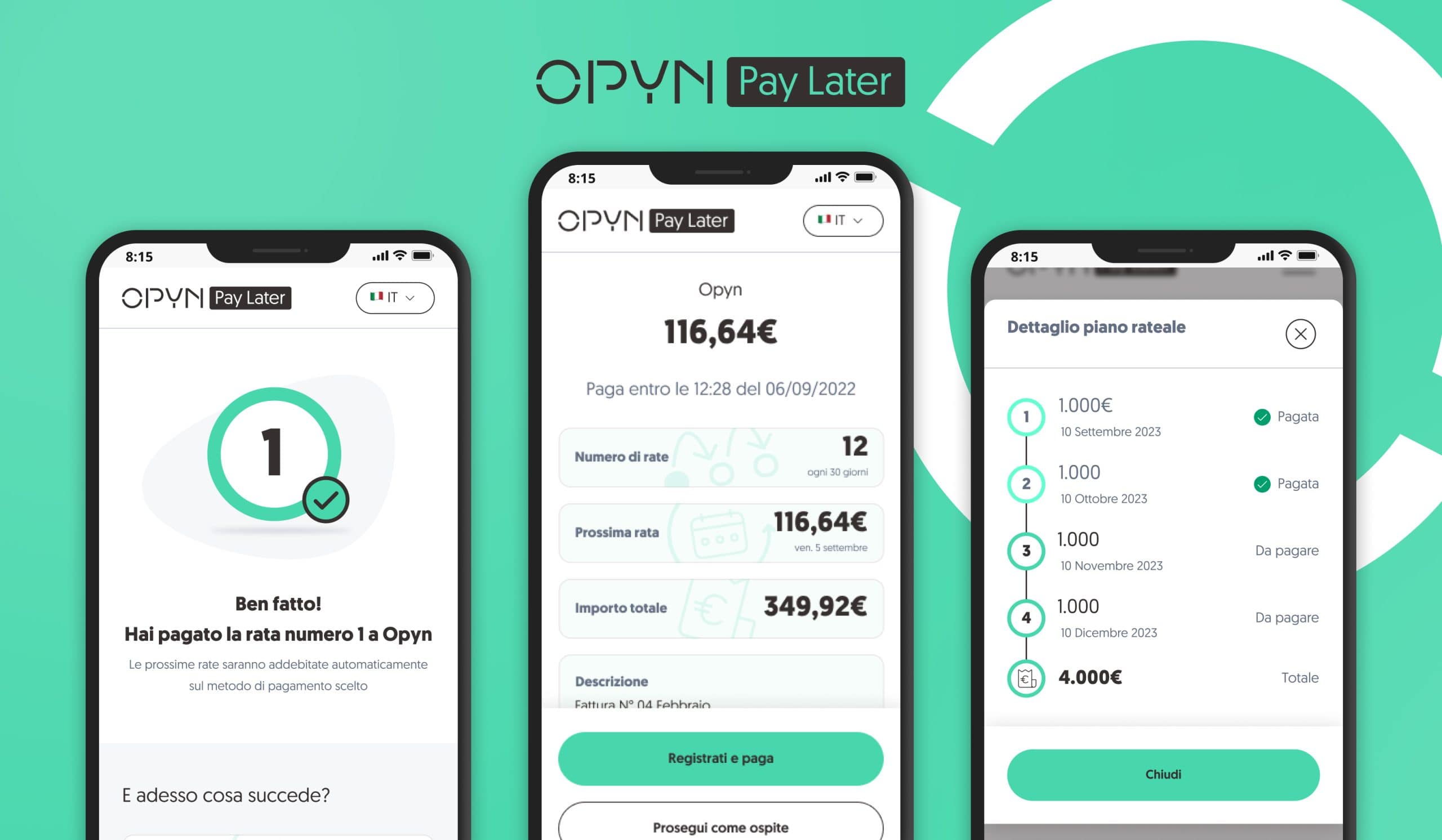
Opyn Pay Later is a new Buy Now Pay Later solution entirely dedicated to the B2B sector, with a user-centered approach. The platform allows suppliers (merchants) to receive deferred payments from their clients (buyers) in a flexible, easy, and secure manner.

Overview

User Research

Target users

Interviews involved 12 participants with various business types and roles; 6 focusing on sales activities and the other 6 on purchasing habits. During the interviews, we discussed their current sales/purchasing experiences, the payment methods offered and used, and their familiarity with installment tools.
The interviews revealed several considerations regarding these two user types: Merchants (suppliers) and Buyers (purchasers).
Ideal Merchant

Occasional Supplier

Medium-high sales (average tickets between €1,000 and €3,000), occasional purchase frequency (monthly/quarterly), and a good level of digitalization allow smoother integration of both pay-by-link and plugin methods.
Pay Later can replace bank transfers to reduce the risk of non-payment, in particular for merchants acquiring new clients or those with clients who often pay late.

Ideal Buyer

Start-up

Micro-enterprises and freelancers with limited cash flow that make challenging large purchases by paying the full amount upfront. Their average monthly purchase volume falls within the Pay Later spending range. Additionally, compared to other buyer types, start-ups use bank transfers less frequently and prefer other digital methods, indicating a greater predisposition to alternative digital payment methods.

Quantitative research

To proceed with the design phase of Opyn Pay Later, it was essential to have data supporting the project. Therefore, a quantitative study was conducted to provide objective data on sales and purchasing habits, the most used and accepted payment methods, and which user types OPL could create new business opportunities for.
The research involved 294 merchant companies and 317 buyers.

Key questions
  • General company information
  • Feedback on the Pay Later service
  • Approach to purchases and payments


Merchant
  • Spending Limit
    Positive feedback on the €3,000 limit for product usage.
  • Hybrid Mode
    Hybrid payment methods are the most used, with bank transfers and bank receipts being preferred, followed by credit and debit cards.
  • Pay Attention
    In most cases, clients are mixed (B2B + B2C).
Buyer
  • Insight
    The security and reliability of the system are very important.
  • Opportunity
    Micro-enterprises and start-ups confirm to be the most promising buyer profiles for monthly purchase volume.

    Established companies also show interest in the product, especially concerning hybrid purchasing methods.

Ideation

Brainstorming sessions took place, involving the core team made of design, product, development and business teams, to generate ideas and solutions with the aim of defining user experience and indentifying product key features.
Key features
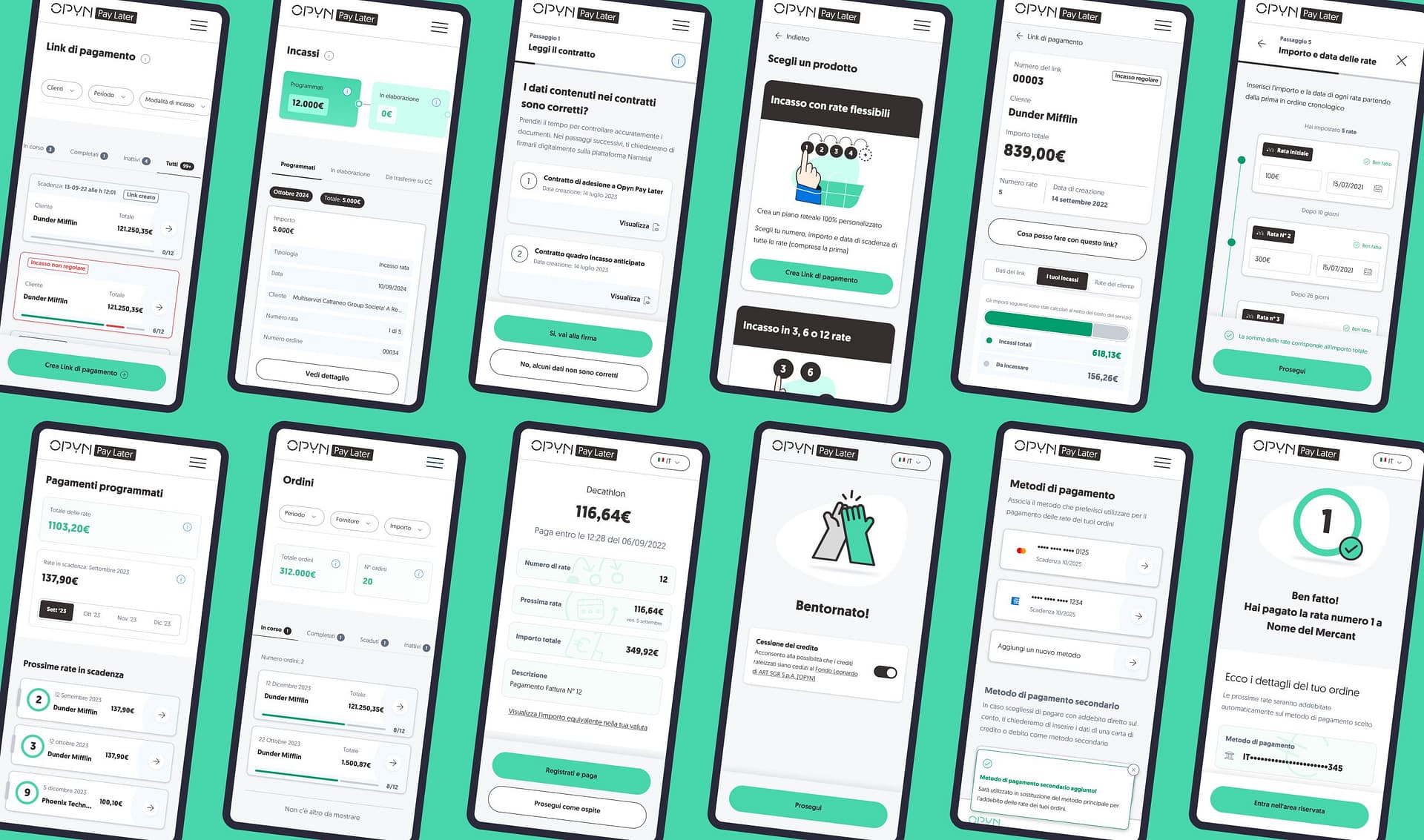
  • Digital and intuitive registration process for merchants and buyers
  • Payment links to finalize sales.
  • Essential personal areas for monitoring purchases and/or sales.
  • Upcoming or overdue payments notifications.
User flow
Merchant
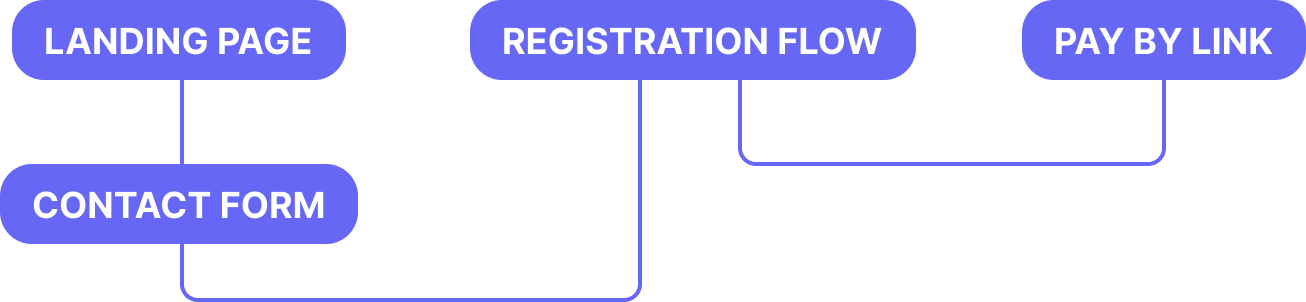
Buyer

Design

Before moving forward with the hi-fi version, it was necessary to create low-fi wireframes to validate product functionalities. Opyn Pay Later experience has been tested with some users, both Merchants and Buyers, gathering feedback on each step before proceeding to the design of hi-fi interfaces.
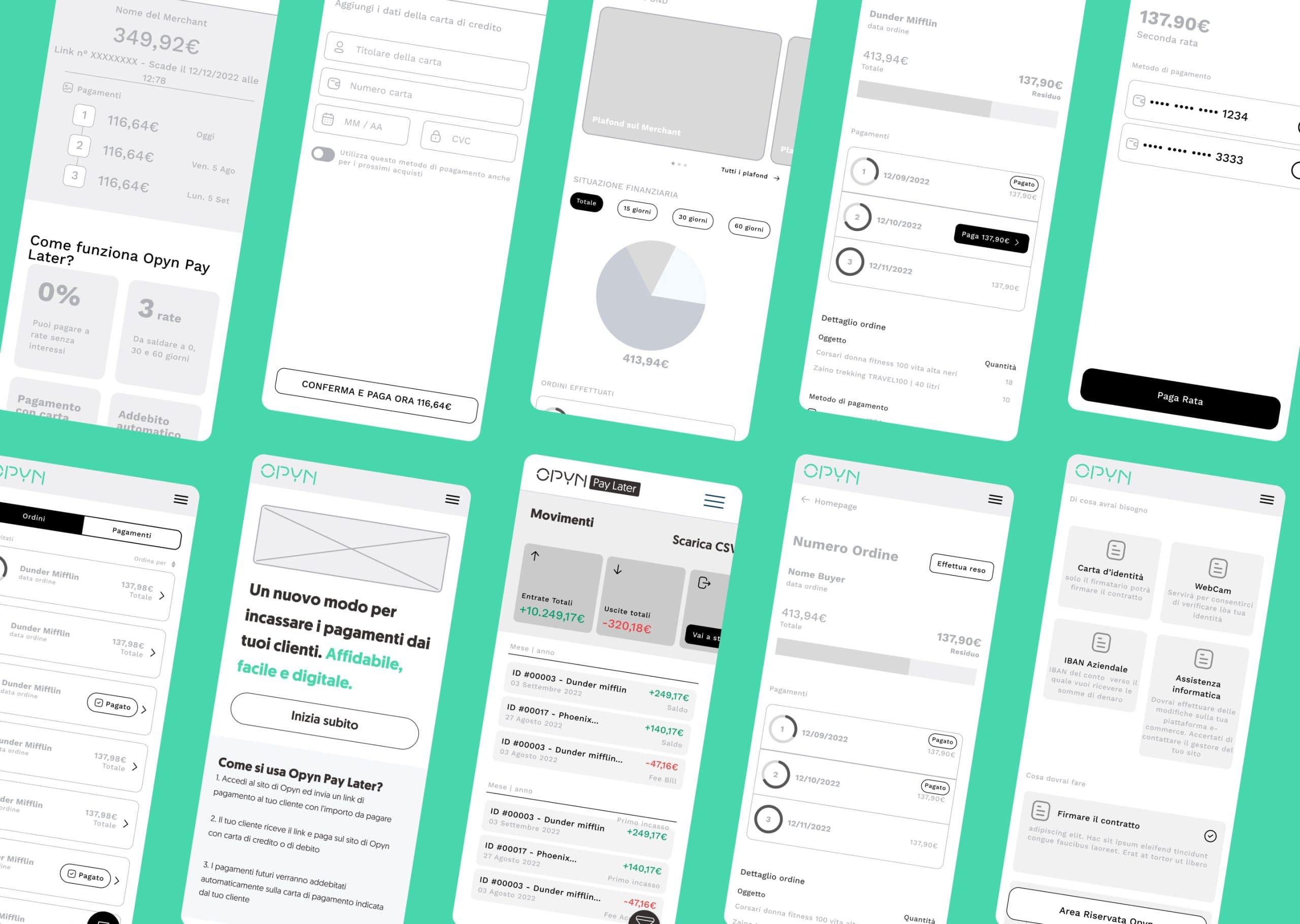
Tested user experiences
  • Creation and sending of a Pay by Link (Merchant)
  • Personal dashboard (Merchant & Buyer)
  • Payment and order summary (Buyer)
  • Notification of an upcoming or missed payment installment (Buyer)
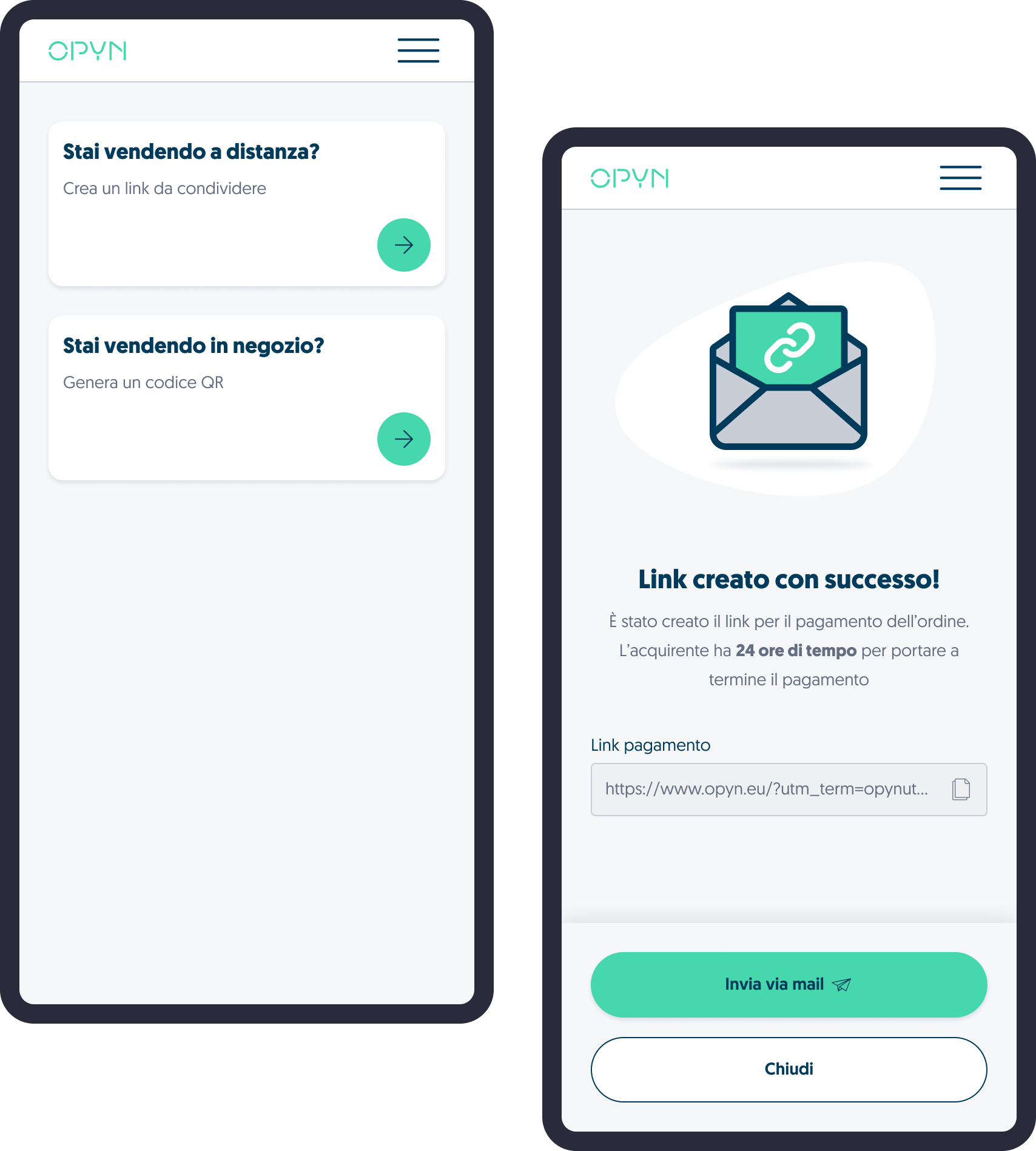
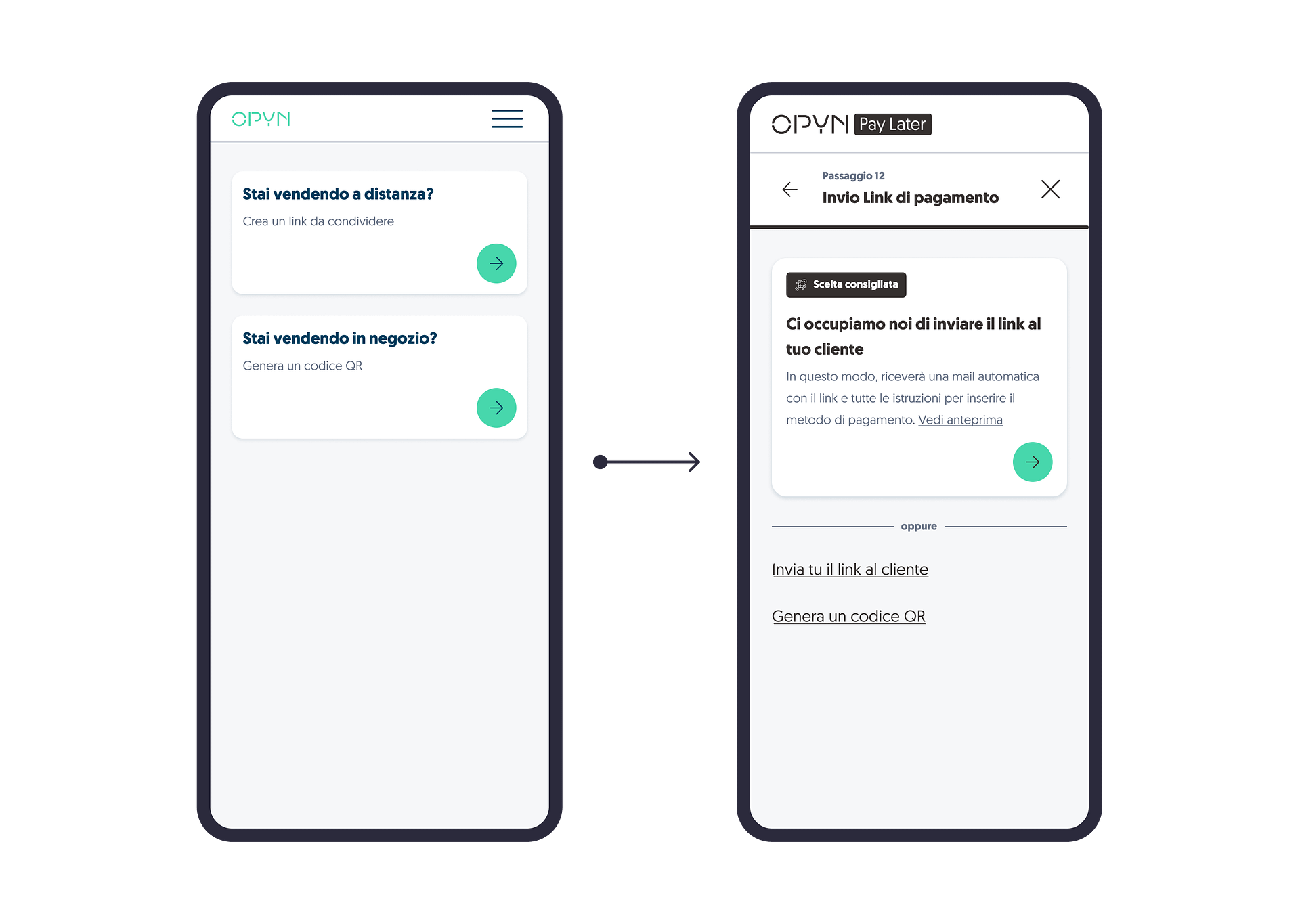
Creation and sending of a Pay by Link

The “copy-paste” of the link into the communication with the buyer is the primary action of all merchants interviewed when using the pay-by-link feature. All other functionalities are considered secondary.

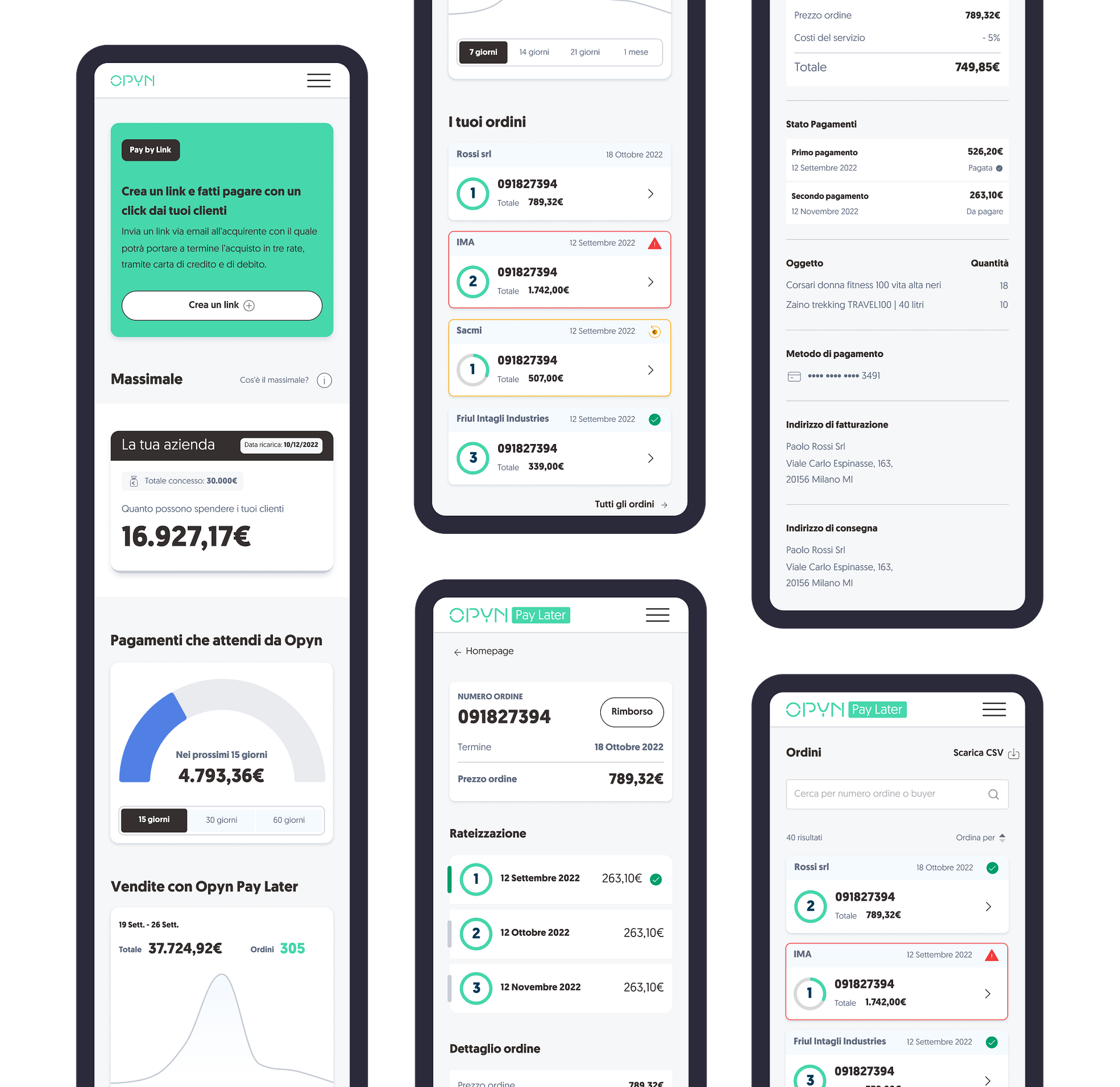
Personal dashboard

The order detail information should be organized hierarchically, prioritizing those that inform the merchant about the status of their payments.

The orders and payments interface is designed to better distinguish ongoing orders from the history of completed orders and to provide the ability to download data, simplifying accounting operations.

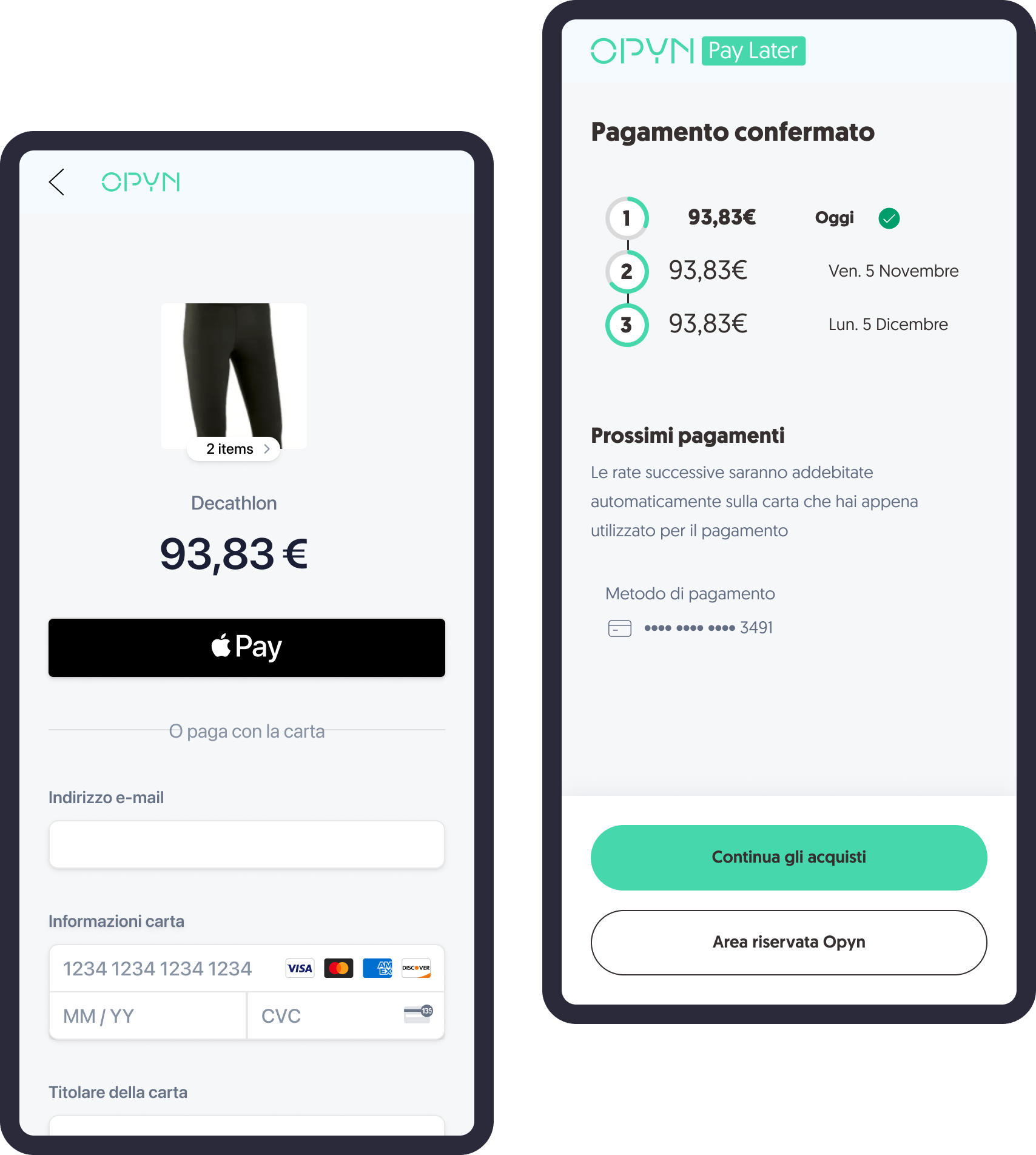
Payment and order summary

At the moment of selecting the product, users are uncertain about accepted payment methods, applied fees and the security of the payment method.

For the users it is not clear that they are registering for a service and the meaning of the statement regarding the acceptance of credit assignment.

Testing and iteration

After the development of the first version of Opyn Pay Later, user session tracking and continuous research work have proven essential in introducing the first improvements to the product, addressing the fundamental needs of our users.

High expiration rate of payment links

Analysis of the data revealed that most payment links sent by merchants were not completed by customers. To address this issue, we extended the validity of the links from 24 to 48 hours. Continuing the analysis, we found that the method with the lowest expiration rate was the “automatic sending” option. To encourage this choice, we intervened on the user experience and the link creation interface, optimizing them to guide users toward this solution.

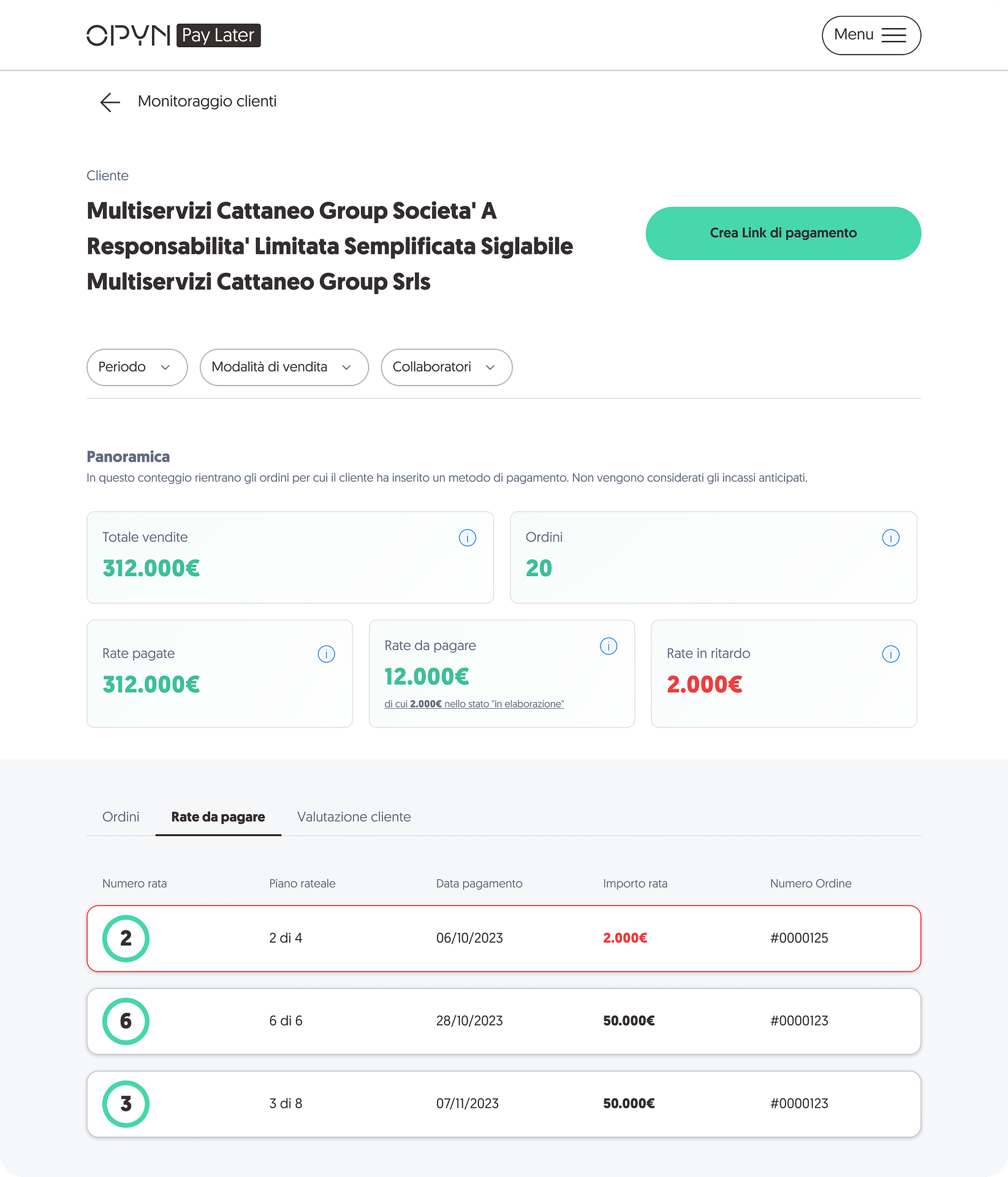
Monitoring section

Conversations with our merchant users highlighted the need of a section dedicated to track their financial exposure to customers. This section would allow them to monitor the status of installment payments, check for any overdue installments, and track the progress of ongoing transactions. Such a tool would be crucial in supporting merchants in making strategic sales decisions toward their customers.